

If you’re still manually following up with leads, sending one-off emails, or juggling spreadsheets to manage prospects – you’re already behind.
B2B marketing automation isn’t just a productivity tool anymore. It’s the backbone of scalable, predictable growth for modern businesses.
In this guide, you’ll learn exactly what B2B marketing automation is, how it works, why it matters, and how to use it to generate high-quality leads and booked appointments on autopilot.
What Is B2B Marketing Automation?
B2B marketing automation refers to the use of software and technology to automate repetitive marketing tasks, nurture leads, and streamline the entire customer journey—from first touchpoint to conversion.
Instead of manually sending emails, tracking leads, or following up, automation tools handle these processes based on predefined triggers and workflows.
Popular platforms like HubSpot, GoHighLevel, and Marketo allow businesses to:
- Capture leads automatically
- Segment audiences
- Send personalized email sequences
- Track user behavior
- Score leads based on intent
- Trigger follow-ups across multiple channels
Why B2B Marketing Automation Matters
Let’s be blunt: manual marketing doesn’t scale.
If you’re targeting high-ticket clients (like real estate, healthcare, SaaS, or agencies), your success depends on consistency, speed, and personalization – all at scale.
Here’s what automation solves:
1. Inconsistent Lead Follow-Up
Most businesses lose leads simply because they don’t follow up fast enough.
Automation ensures:
- Instant responses
- Multi-touch follow-ups (email, SMS, WhatsApp)
- No lead slipping through the cracks
2. Low Conversion Rates
Generic outreach kills conversions.
Automation enables:
- Behavior-based personalization
- Dynamic messaging
- Smart segmentation
3. Time Drain on Repetitive Tasks
Manually sending emails and tracking leads is a waste of high-value time.
Automation frees you to focus on:
- Strategy
- Closing deals
- Scaling operations
How B2B Marketing Automation Works
At its core, B2B marketing automation is built around workflows.
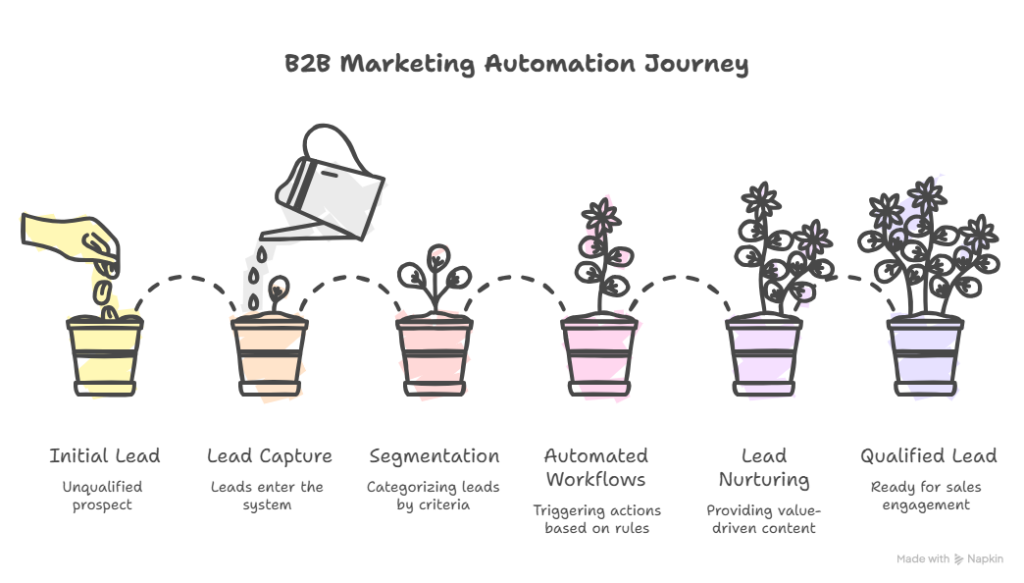
Here’s a simple breakdown:
Step 1: Lead Capture
Leads enter your system via:
- Landing pages
- Cold outreach (email/LinkedIn)
- Ads
- Website forms
Step 2: Segmentation
Leads are categorized based on:
- Industry
- Behavior
- Engagement level
- Source
Step 3: Automated Workflows
Pre-built sequences trigger actions like:
- Sending emails
- Assigning tags
- Notifying sales teams
- Booking appointments
Step 4: Lead Nurturing
Leads receive value-driven content over time:
- Case studies
- Educational emails
- Offers
Step 5: Conversion & Tracking
You track:
- Open rates
- Click-through rates
- Replies
- Booked calls
And optimize based on data.
Key Features of B2B Marketing Automation
To build a high-performing system, these features are non-negotiable:
 Email Automation
Automated sequences for cold outreach and nurturing.
CRM Integration
Centralized lead tracking and pipeline management.
Multi-Channel Communication
Email, SMS, WhatsApp, and even AI voice follow-ups.
Lead Scoring
Prioritize leads based on intent and engagement.
Analytics & Reporting
Data-driven decisions based on real performance.
Real-World Example of B2B Marketing Automation
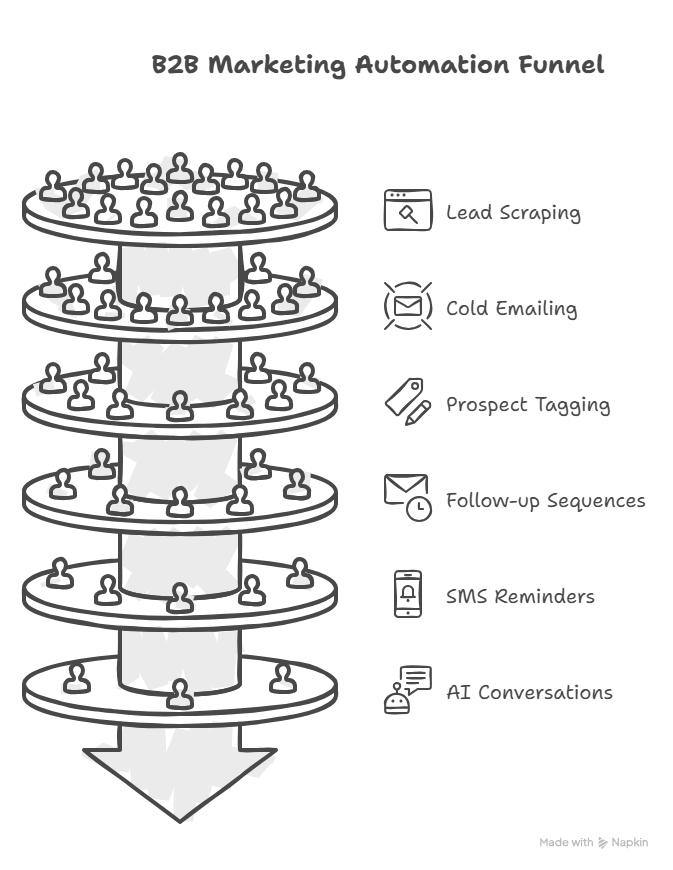
Let’s say you’re targeting roofing companies in the US.
Instead of manually reaching out:
- You scrape leads using tools like Phantombuster
- Send cold emails via Smartlead
- Automatically tag interested prospects
- Trigger follow-up sequences
- Send SMS reminders for booked calls
- Use AI tools like Retell AI to handle initial conversations
Result:
A fully automated pipeline generating qualified appointments daily.
Benefits of B2B Marketing Automation
Scalability
Reach thousands of prospects without increasing workload.
Better Targeting
Send the right message to the right person at the right time.
Time Efficiency
Eliminate repetitive tasks.
Higher ROI
More conversions with less manual effort.
Consistent Lead Nurturing
Build trust over time without manual input.
Common Mistakes to Avoid
Most people fail with automation because they treat it like a shortcut.
Avoid these:
 Over-automation without personalization
- Poor targeting (spray and pray)
- Weak messaging
- Ignoring analytics
- Not integrating tools properly
Automation amplifies your strategy — it doesn’t fix a bad one.
Best Practices for B2B Marketing Automation
If you actually want results, follow this:
1. Start With a Clear Funnel
Know your:
- Target audience
- Offer
- Customer journey
2. Focus on Personalization
Use:
- First names
- Industry-specific messaging
- Behavior-based triggers
3. Build Multi-Touch Campaigns
Don’t rely on one channel.
Combine:
- SMS
- Calls
4. Test & Optimize Continuously
Track performance and refine:
- Subject lines
- Copy
- Timing
Is B2B Marketing Automation Worth It?
Short answer: yes – if you’re serious about growth.
If you’re:
- Running an agency
- Selling high-ticket services
- Targeting businesses (not consumers)
Then marketing automation is no longer optional.
It’s your competitive advantage.
Final Thoughts
B2B marketing automation is not about replacing human effort – it’s about multiplying it.
The businesses winning in 2026 are not the ones working harder…
They’re the ones building smarter systems.
If you want predictable leads, consistent appointments, and scalable growth – you need automation working for you 24/7.
Meta Title
Meta Description
SEO Keywords Included
Primary keyword:
- what is b2b marketing automation
LSI keywords:
- b2b marketing automation tools
- benefits of marketing automation
- automated lead generation
- crm and marketing automation
- marketing automation workflows
- b2b lead nurturing strategies