Why Digital Marketing Is Important for Small Businesses: A Complete Guide to Growth and Success
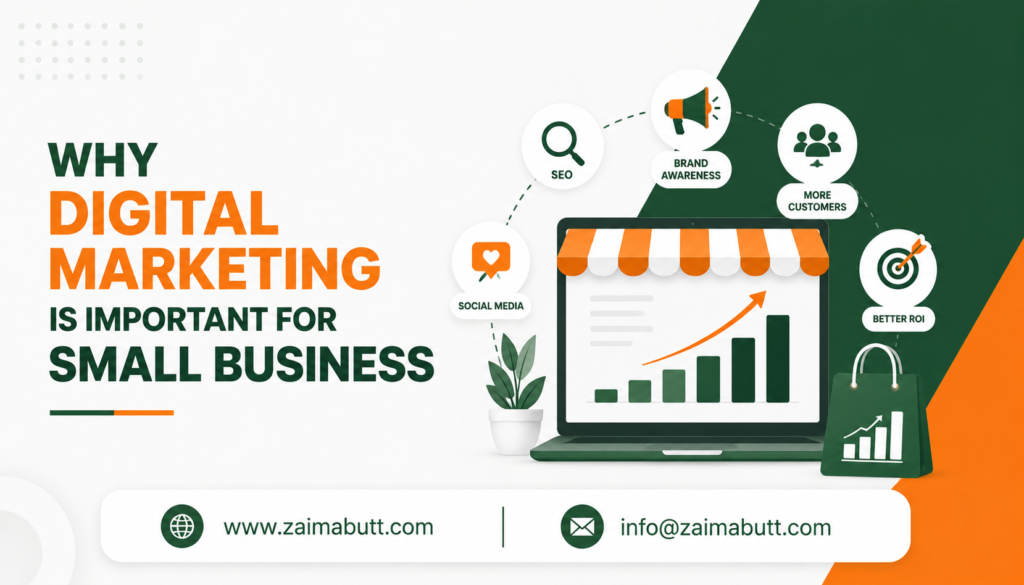
Running a small business has never been easy. Business owners often face challenges such as limited budgets, increasing competition, and changing customer expectations. Yet small businesses remain the backbone of the American economy. According to the U.S. Small Business Administration, there are approximately 33.3 million small businesses in the United States, accounting for 99.9% of all businesses. These companies play a critical role in driving innovation, supporting local communities, and creating economic opportunities. Small businesses also have a major impact on employment. Collectively, they employ 61.6 million people, representing 45.9% of the U.S. workforce. As competition continues to grow, these businesses need effective ways to reach customers and maintain steady growth. Today, customers spend a significant amount of their time online, searching for products, reading reviews, comparing services, and interacting with brands. This shift in consumer behavior has made digital marketing one of the most powerful tools available for business growth. Understanding why digital marketing is important for small businesses can help business owners attract more customers, increase revenue, and build a sustainable brand. Whether you run a local store, a startup, or an online business, investing in digital marketing can create new opportunities for growth, visibility, and long-term success. What Is Digital Marketing and Why Does It Matter? Digital marketing refers to promoting products and services through online channels such as search engines, websites, social media platforms, email campaigns, and digital advertisements. Unlike traditional marketing methods, digital marketing allows businesses to connect directly with their target audience. The importance of digital marketing continues to grow because customers now rely heavily on online information before making purchasing decisions. Businesses that maintain a strong online presence are more likely to attract attention, generate leads, and convert visitors into paying customers. For many companies, digital marketing for small businesses has become a necessity rather than an option. Without a digital presence, businesses risk losing potential customers to competitors who are easier to find online. Why Digital Marketing Is Important for Small Businesses Today The modern customer journey often begins with an online search. People use search engines to find local services, compare products, and read customer reviews. If your business is not visible online, many potential customers may never discover it. One of the main reasons why digital marketing is important for small businesses is that it helps companies reach customers where they spend most of their time. Through websites, social media, search engines, and email communication, businesses can remain visible throughout the customer journey. Digital marketing for small businesses also provides flexibility. Businesses can adjust campaigns, test different strategies, and measure performance in real time. This level of control is difficult to achieve through traditional advertising methods. How Digital Marketing for Small Businesses Increases Brand Awareness Brand awareness is essential for business growth. Customers are more likely to purchase from brands they recognize and trust. Digital marketing helps businesses establish that recognition through consistent online visibility. Social media platforms, blogs, websites, and video content allow businesses to communicate their values and showcase their expertise. Through regular engagement, companies can create lasting impressions on potential customers. Some ways digital marketing strengthens brand awareness include: These efforts contribute to stronger customer relationships and support long-term online business growth. Benefits of Digital Marketing for Customer Acquisition and Retention One of the biggest benefits of digital marketing is its ability to attract new customers while keeping existing ones engaged. Traditional advertising often targets broad audiences, whereas digital marketing focuses on people most likely to be interested in a product or service. Businesses can use targeted campaigns to reach customers based on: This targeted approach improves small-business customer acquisition and increases the likelihood of converting leads into customers. The benefits of digital marketing also extend beyond acquiring new customers. Businesses can nurture existing relationships through personalized communication, loyalty programs, and valuable content that encourages repeat purchases. SEO for Small Businesses: Driving Long-Term Organic Growth Search Engine Optimization, commonly known as SEO, is one of the most effective long-term marketing investments. SEO for small businesses focuses on improving website visibility in search engine results so customers can easily find relevant products and services. When a website ranks higher in search results, it receives more organic traffic without paying for every visitor. This makes SEO a cost-effective strategy for sustainable growth. Key benefits of SEO for small businesses include: Businesses that invest in SEO often experience consistent online business growth over time. Social Media Marketing for Small Business Success Social media has transformed how businesses interact with customers. Platforms such as Facebook, Instagram, LinkedIn, and TikTok allow companies to engage directly with their audience. Social media marketing for small business growth helps brands increase visibility, build communities, and strengthen customer relationships. Businesses can share updates, promote products, answer questions, and gather customer feedback in real time. Effective social media marketing for small business owners creates opportunities to reach new audiences while maintaining strong connections with existing customers. By consistently posting valuable content and engaging with followers, businesses can build trust and encourage long-term loyalty. Content Marketing for Small Business: Building Authority and Trust Content marketing plays a critical role in educating customers and establishing expertise. Through blogs, videos, guides, and informative articles, businesses can answer customer questions and provide useful information. Content marketing for small business growth is particularly effective because it helps attract visitors who are actively searching for solutions. High-quality content also supports SEO efforts by improving website relevance and authority. Some examples of content marketing include: When businesses consistently publish valuable content, they position themselves as trusted sources within their industry. Email Marketing for Small Business Customer Loyalty Email remains one of the most effective digital communication channels. Email marketing for small business owners provides a direct way to connect with customers and maintain ongoing relationships. Businesses can use email campaigns to: Email marketing for small business growth often delivers a strong return on investment because it targets people who have already shown interest in the brand. Regular communication keeps businesses top of mind
How to Hire a Digital Marketing Agency: Complete Guide to Platforms, Process & Key Factors
Digital advertising has become one of the most indispensable marketing tools worldwide. Thanks to rising internet penetration rates and the ever-increasing demand for online content, global digital advertising spending is forecast to reach an all-time high of over 950 billion U.S. dollars in 2026. This figure is even more impressive considering it accounts for around 70 percent of total global ad investments. Studies also show that more than 5.4 billion people worldwide are now internet users, making digital platforms the largest space for brand communication. In addition, over 60 percent of global ad spending is now directed toward mobile advertising, showing a strong shift toward mobile-first consumer behavior, making it essential for any digital marketing agency to guide. Social media advertising alone is expected to generate more than 230 billion U.S. dollars in annual revenue, highlighting its growing importance for businesses and reinforcing the need to hire a social media marketing agency. Furthermore, over 80 percent of marketers globally agree that digital advertising delivers better ROI compared to traditional media, which is why many businesses now focus on hiring marketing agencies to improve performance. This diverse and dynamic form of advertising has experienced a considerable upswing across the world, and the digital ad space is becoming more consolidated and competitive every year. When Should You Hire a Marketing Agency? You should consider hiring a marketing agency when your current marketing efforts are not delivering the expected results. If your business is not getting enough traffic, leads, or engagement, it is usually a clear warning sign. It often means your strategy needs expert review and professional improvement, which is why a proper digital marketing agency guide becomes important. Many businesses also choose to hire an agency when they want to grow faster and scale their operations. Effective marketing at scale requires proper tools, experience, and consistent execution. Without expert support, growth can become slow, unpredictable, and difficult to maintain, especially when working with a social media marketing agency or exploring options like freelance vs agency hiring. Another important reason is the lack of time to manage marketing activities properly. If you are already busy running daily business operations, it becomes hard to focus on consistent marketing. In such cases, outsourcing to a marketing agency helps you stay consistent while experts handle growth, including a proper agency onboarding process for better results. Key Factors to Consider Before Hiring The first thing you should always check before hiring a marketing agency is its experience and past work. A strong portfolio gives you a clear idea of what they are capable of delivering and whether they have worked with businesses similar to yours. Experience also reduces the risk of failure because agencies that have handled multiple projects usually understand what strategies actually work in real-world situations. Communication is another very important factor during the selection process. If an agency is unclear, slow to respond, or vague in early discussions, it can create bigger problems later during the actual project. Good agencies take time to understand your goals and explain their strategies in a simple and transparent way so you know exactly what to expect from them. You should also carefully review pricing and service details before making a final decision. Some agencies may hide extra charges or offer unclear packages that can lead to confusion later. Clear pricing and well-defined deliverables at the beginning help you build a smooth and trustworthy working relationship with the agency. Where to Hire Marketing Services There are several platforms available today where you can hire marketing experts depending on your business needs. Each platform works differently, and the choice mainly depends on your budget, goals, and how quickly you want to start your marketing activities. Some platforms are designed for fast hiring, while others are more structured and suitable for long-term professional relationships. Freelance platforms are usually a good option for quick and affordable hiring. They give you access to a large pool of freelancers who can handle tasks like SEO, social media marketing, and content creation. On the other hand, professional networks and agency platforms are more organized and offer better reliability for businesses that want consistent and long-term support. Direct hiring through agencies or professional connections provides more trust, control, and accountability. The right platform depends on where your business currently stands in its growth journey. Beginners often start with freelancers to save costs, while growing businesses prefer established agencies for better strategy and scalability. Fiverr (Freelance Marketplace) Fiverr is a popular platform for hiring freelancers worldwide. You can find services like SEO, social media marketing, and ad management easily. It is widely used by small businesses and startups because it offers flexible pricing and quick access to talent. According to Statista, Fiverr had over 3.1 million active buyers globally in recent years, showing its strong demand in the freelance economy. The platform is simple and allows fast hiring within minutes, where users can compare different sellers based on reviews and pricing. This makes it easier to find budget-friendly options for different marketing needs, especially when exploring Fiverr marketing services or following a digital marketing agency guide. This means careful selection, review, checking, and portfolio evaluation are important to avoid poor results and ensure better outcomes, especially when making decisions like freelance vs agency hiring or choosing the right SEO agency selection process. Upwork (Professional Freelance Platform) Upwork is a more structured platform designed for professional hiring. You can post a job requirement and receive proposals from skilled freelancers or agencies worldwide. It is widely used for long-term and serious projects because it provides better organization and reliability compared to quick gig-based platforms. According to Statista, Upwork had over 800,000 active clients in recent years, showing strong adoption among businesses looking for professional freelance talent. The platform also includes built-in tools for tracking work, managing milestones, and ensuring project transparency. This makes it easier for businesses to monitor progress and maintain accountability throughout the project, especially when working with Upwork freelancers for long-term tasks. Upwork
How to Get Digital Marketing Clients: Proven Strategies for Beginners and Agencies
Learning digital marketing skills is no longer enough. The real challenge for freelancers and agencies is understanding how to get digital marketing clients consistently. Without clients, even advanced SEO, ads, or social media skills cannot generate income. Global digital advertising spending now surpasses $800 billion, showing how massive and competitive the industry has become. This makes client acquisition even more important because businesses are actively investing in digital channels, but they expect strong results and a clear strategy before hiring anyone. Most beginners struggle because they focus only on learning tools instead of client acquisition strategies. But in reality, client flow is the foundation of any digital marketing career. Companies today allocate around 9.1% of their total revenue to marketing, and nearly 45% to 55% of that budget is spent on digital advertising, which shows how much opportunity exists for skilled freelancers and agencies who know how to position themselves correctly. In this guide, you will learn practical ways to find digital marketing clients, including freelancing platforms, cold outreach, SEO, and personal branding. Understanding Your Target Client (Foundation of Client Acquisition) If you want to understand how to find digital marketing clients, the first step is knowing your target audience clearly. You cannot sell to “everyone” because different businesses need different solutions. When you focus on a specific niche, it becomes much easier to attract SEO clients for beginners and build trust with businesses that are already looking for results-driven services. Each client type has different needs. For example, local businesses want more calls and walk-ins, while eCommerce brands focus on online sales and conversions. Understanding these pain points helps you create better offers and improves your chances of getting social media marketing clients because your messaging becomes more specific and relevant. This step is also important for long-term growth because defining a niche strengthens your positioning in the market. It directly supports agency client acquisition strategies, making it easier to stand out from competitors and communicate value clearly. Building a Strong Personal Brand to Attract Clients Personal branding is one of the most powerful ways to find digital marketing clients and especially important when you are trying to get the first digital marketing client. When people trust your online presence, they contact you directly without heavy selling. A strong personal brand helps you attract freelance digital marketing clients by positioning you as someone who understands real business problems, not just tools or theory. A strong personal brand includes LinkedIn optimization, consistent posting, and showcasing results or sample work. Even beginners who are looking for SEO clients for beginners can create demo or practice case studies to build credibility and improve digital marketing lead generation. This strategy also supports inbound marketing because clients discover you through content instead of ads or outreach. It also improves how you pitch digital marketing services, since clients already see you as trustworthy before you contact them. Freelance Platforms and Marketplaces Strategy Platforms like Upwork, Fiverr, and Freelancer are still effective for beginners looking for SEO clients for beginners or social media marketing clients. These platforms already have buyers searching for services. However, competition is high, so your profile must be clear and result-focused. Instead of listing skills, focus on outcomes like “I help businesses get more leads through Facebook ads.” Start small to build reviews. Once you have credibility, you can increase pricing and attract better projects. Cold Outreach That Actually Works for Client Acquisition Cold outreach is still one of the fastest ways to get a first digital marketing client. It includes sending emails, LinkedIn messages, or Instagram DMs to potential clients. The key is personalization. Avoid copy-paste messages. Instead, mention something specific about the business and offer value, such as a free audit or suggestion. This method is widely used in agency client acquisition strategies because it generates direct B2B digital marketing leads. Inbound Marketing for Long-Term Client Flow Cold outreach is still one of the fastest ways to get B2B digital marketing leads, especially for freelancers and small agencies who want quick results. It involves directly contacting potential clients through email, LinkedIn, or Instagram messages. When done correctly, it becomes one of the most effective freelancing marketing tips for beginners who are trying to enter the market without waiting for organic traffic or referrals. The key to success is learning how to sell digital marketing services in a simple and value-focused way. Instead of pitching aggressively, focus on identifying problems and offering solutions. This approach also helps in building inbound leads for agencies over time because strong outreach can turn into long-term relationships and referrals. Along with this, cold outreach for marketing clients should always be personalized, short, and helpful rather than spammy or generic. At the same time, combining outreach with personal branding for marketers makes your efforts much more powerful. When clients recognize your name or content online, your messages feel more trustworthy, increasing response rates and conversions. Networking and Referral Strategy for Getting Clients Networking is often underestimated but very powerful for freelance marketing clients. Many high-paying clients come through referrals and relationships rather than cold outreach. You can connect with other freelancers like designers, developers, and copywriters. These professionals often refer clients when they are overloaded. Also, asking for referrals after completing a project is a simple but effective strategy. Packaging and Selling Digital Marketing Services To successfully get digital marketing clients, you need to package your services properly. Instead of selling random tasks, create clear service bundles. For example, instead of saying “SEO service,” offer “SEO growth package for small businesses.” This makes it easier for clients to understand value. This approach is important for agency client acquisition strategies because structured offers increase conversion rates. Common Mistakes That Stop Beginners from Getting Clients Many beginners fail at selling digital marketing services because they make avoidable mistakes. One major mistake is not choosing a niche, which makes messaging unclear and weak. Without a clear focus, it becomes difficult to attract SEO clients for beginners or build
How to Grow a Digital Marketing Agency in 2026
The digital marketing industry is growing rapidly as more businesses rely on online platforms to reach customers. From small startups to large companies, every business wants better online visibility, more traffic, and higher sales. This increasing demand has created many opportunities for digital marketing agencies. In fact, content marketing continues to prove its strong value in the industry. In 2025, blog posts made up around 38% of the most used content formats by marketers, ranking third after short-form video (60%) and long-form video (38%), showing their continued importance in marketing strategies. Blog content also remains one of the highest ROI-driven formats, with 22.26% of marketers reporting strong returns from it, while small businesses are 23% more likely than average to see ROI from blog posts. Additionally, website, blog, and SEO combined remain the #1 ROI-generating marketing channel, followed by paid social media at 26% (HubSpot State of Marketing Report, 2026). HubSpot Marketing Statistics However, growing a digital marketing agency is not easy. Many agencies struggle because they focus only on getting clients instead of building systems, improving service quality, and creating long-term strategies. To grow successfully, agencies need strong branding, search engine optimization, quality content, lead generation systems, and excellent customer relationships.This approach helps agencies attract high-intent traffic and build long-term organic visibility. Understand Your Agency Positioning One of the biggest mistakes agencies make is trying to serve everyone. When an agency offers too many unrelated services, it becomes difficult for potential clients to understand its expertise. Clear positioning helps agencies stand out in a highly competitive market. Your agency should define its target audience, services, and value proposition clearly. For example, your agency may specialize in SEO services for e-commerce brands, content marketing for startups, or social media marketing for local businesses. Specialization often increases trust and makes it easier to attract qualified leads. Strong branding also plays an important role in agency positioning. Your website, logo, messaging, and social media profiles should communicate professionalism and consistency. Businesses are more likely to trust agencies with a clear identity and strong online presence. A focused agency positioning strategy improves brand recognition and increases conversion opportunities. Build a Strong Website and SEO Foundation Your website is one of the most important assets for agency growth. A poorly designed website can reduce trust and increase bounce rates. On the other hand, a professional and optimized website helps attract leads and improve conversions. Semantic SEO is especially important for agency websites. Search engines now understand context, relationships between topics, and user intent better than before. Instead of creating thin pages with repeated keywords, agencies should build content clusters around major topics such as SEO, PPC advertising, social media marketing, analytics, and content strategy. Internal linking is another important part of semantic SEO. Related pages should connect naturally to improve topical relevance and user experience. Technical SEO factors such as page speed, mobile responsiveness, and schema markup also improve search visibility. A strong SEO foundation helps agencies generate consistent organic traffic and long-term inbound leads. Use Semantic Content Marketing for Authority Content marketing is one of the most effective ways to grow a digital marketing agency. Businesses trust agencies that regularly share useful and informative content. Publishing blogs, case studies, videos, and guides helps establish authority and improve online For example, if your agency writes about local SEO, related content should include Google Business Profile optimization, local citations, customer reviews, location-based keywords, and search intent. This comprehensive coverage improves topical authority and helps search engines understand your expertise. Content should also match different stages of the customer journey. Some users may search for beginner information, while others may look for advanced marketing strategies or agency pricing details. Creating content for multiple search intents increases visibility and engagement. High-quality content improves trust, search rankings, and lead generation opportunities. Generate Consistent Leads and Sales Many agencies depend only on referrals, but referrals alone are not enough for long-term growth. Agencies need reliable lead generation systems that bring consistent business opportunities every month. Search engine optimization, paid advertising, email marketing, and LinkedIn outreach are effective lead generation channels. Agencies should also create landing pages designed for conversions. A strong landing page includes clear messaging, client testimonials, case studies, and strong calls to action. Lead magnets can also increase conversions. Offering free SEO audits, ebooks, marketing templates, or consultations encourages visitors to share their contact information. Email marketing campaigns can then nurture these leads and guide them toward becoming paying clients. A predictable lead generation strategy creates stable revenue and supports agency growth. Improve Client Retention and Trust Getting new clients is important, but keeping existing clients is even more valuable. Client retention reduces customer acquisition costs and increases long-term profitability. Agencies with strong client relationships often receive referrals and repeat business. Communication is one of the most important parts of client retention. Clients want transparency, regular updates, and measurable results. Agencies should explain strategies clearly and provide reports showing improvements in traffic, rankings, leads, and conversions. Providing consistent value also improves trust. Instead of focusing only on short-term campaigns, agencies should help clients achieve long-term business goals. Personalized strategies and proactive communication strengthen customer relationships. Satisfied clients often become loyal brand advocates who recommend your agency to others. Build a Scalable Team and Workflow As your agency grows, managing everything manually becomes difficult. Without systems and workflows, agencies may struggle with missed deadlines, poor communication, and reduced service quality. Project management tools, automation software, and customer relationship management systems help agencies improve efficiency. Standard operating procedures also help teams complete tasks consistently and reduce operational confusion. Hiring skilled professionals is equally important. Agencies need experts in SEO, content writing, graphic design, social media marketing, paid advertising, and analytics. A strong team improves service quality and allows agencies to handle larger projects effectively. Efficient systems help agencies scale operations while maintaining high service standards. Use Social Media and Personal Branding Personal branding has become an important growth strategy for agency owners. Businesses prefer working with agencies that
How Much Do Digital Marketing Agencies Charge? (Complete 2026 Guide)
Digital marketing pricing ranges between $5,000 – $50,000 per month, according to Clutch data of over 100,000 digital marketing firms across the world. Digital marketing agency prices can vary depending on the scope of services being provided, the location of the agency, and your business vertical. If you search online, you will see agencies charging anywhere from very low monthly fees to thousands of dollars. This big gap makes it hard for beginners to understand what is fair and what is overpriced. The reason behind this confusion is simple: digital marketing is not a single service. It is a combination of SEO, social media, paid ads, content creation, and strategy. Each business has different goals, so agencies create custom pricing based on needs. For example, a local shop targeting nearby customers will spend much less than an international eCommerce brand competing globally. This is why understanding pricing structure is more important than focusing only on numbers. Once you know how pricing works, you can easily judge which agency fits your budget and goals. Main Factors That Affect Digital Marketing Costs The cost of hiring a digital marketing agency depends on several important factors, and this is a key part of overall digital marketing agency pricing. The first factor is the size of your business. Small businesses usually need basic services like social media management or local SEO, while larger companies require full-scale campaigns with advanced strategies. Naturally, bigger campaigns cost more because they require more time, tools, and expertise, impacting the cost of hiring a digital marketing agency. Another important factor is the type of services you choose. SEO alone is cheaper than combining SEO with PPC, content marketing, and social media management, which directly affects SEO agency cost and overall social media marketing cost. Each additional service increases workload and cost. Agency experience also plays a big role. Highly experienced agencies charge more because they bring proven results and skilled teams. Lastly, your campaign goals affect pricing. Simple goals like increasing traffic cost less, while aggressive goals like generating high sales or leads require bigger budgets and continuous optimization, influencing the overall cost of digital marketing services. Common Pricing Models Used by Digital Marketing Agencies Digital marketing agencies use different pricing models depending on the type of service they offer. The most common model is the monthly retainer, where clients pay a fixed amount every month. This is popular because it provides continuous work such as SEO optimization, content creation, and social media updates. It is ideal for long-term growth and stable marketing efforts. Another model is hourly pricing. In this case, agencies charge based on the time spent working on your project. This is usually used for consulting, audits, or small tasks. Some agencies also offer project-based pricing where you pay a fixed amount for a specific task, like a website SEO audit or campaign setup. A less common but growing model is performance-based pricing. Here, clients pay based on results such as leads or conversions. Each model has its pros and cons, but monthly retainers remain the most widely used in the industry. Average Cost of Digital Marketing Services Digital marketing costs vary based on the service type and the overall cost of digital marketing services in the market. SEO is one of the most important services and usually costs between $300 to $1,000 per month for small businesses, which reflects the typical SEO agency cost in competitive niches. Medium and large businesses may pay significantly more depending on competition and target keywords. SEO includes keyword research, on-page optimization, link building, and technical improvements. Social media marketing, which is part of overall social media marketing cost planning, typically ranges from $200 to $3,000 per month, depending on how active your brand is and how many platforms you use. PPC advertising, such as Google Ads or Facebook Ads, often has a management fee between $300 and $2,000 per month, contributing to overall PPC management pricing, while ad spend is paid separately. Content marketing costs depend on the type and volume of content and are a key part of online marketing pricing. A single blog post can cost anywhere from $20 to $150, while full content strategies cost much more. Full-service digital marketing packages combining all services can range from $500 to over $20,000 per month, depending on business size and goals, which directly impacts monthly marketing packages for businesses. What You Get in Different Price Ranges Digital marketing services are usually divided into three main pricing levels, which directly reflect overall digital marketing agency pricing in the market. Low-budget agencies typically charge between $100 and $500 per month. At this level, services are very basic and may include limited social media posting or minimal SEO work, which is often linked to affordable marketing services. These packages are suitable for individuals or very small businesses, but they usually do not deliver strong growth results. Mid-range agencies charge between $500 and $5,000 per month. This is the most common range for small and medium-sized businesses and forms a large part of the small business marketing budget planning. These packages usually include SEO, content creation, social media management, and sometimes paid ads, including PPC management pricing. You also get monthly reporting and strategy planning, which helps track progress and improve overall online marketing pricing value. High-end agencies charge $5,000 or more per month. These agencies work with large brands and provide full-scale marketing services, including advanced SEO, conversion optimization, data analysis, and dedicated account managers. This level is best for competitive industries where a strong digital presence is required to grow, and it represents the upper range of digital marketing services cost and premium monthly marketing packages. Hidden Costs You Should Know Many businesses only focus on agency fees, but digital marketing often includes hidden costs that are not always mentioned upfront, which can affect the overall cost of digital marketing services. One of the highest hidden costs is ad spend. For example, if you run Google Ads or Facebook
What Services Do Digital Marketing Agencies Offer? A Complete Guide to SEO, PPC, Social Media & More
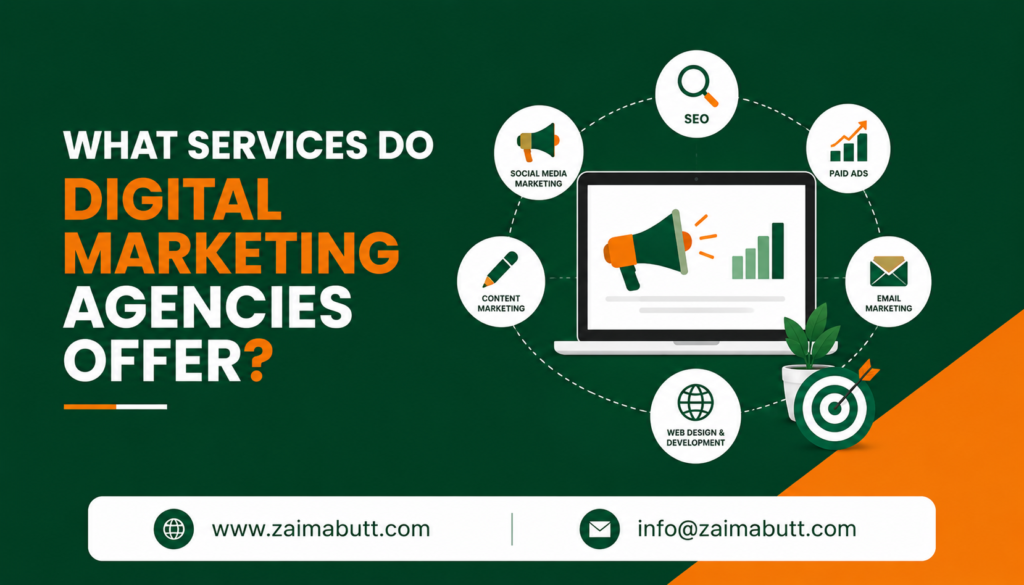
Digital marketing agencies help businesses grow online by using different internet-based strategies in a global digital advertising market worth over $740 billion and growing at a 13.6% annual rate. These agencies manage everything from website visibility to social media marketing and paid advertising campaigns. In today’s digital world, customers search online before buying anything. Whether it is a product, service, or local business, people first check Google, social media, and reviews, with 97% of consumers researching online before making purchasing decisions. Because of this, digital marketing has become essential for every business.A digital marketing agency acts like a partner that helps businesses attract the right audience, increase visibility, and improve sales. But many people still do not clearly understand what services these agencies actually provide. Search Engine Optimization (SEO) SEO is one of the most important online marketing services offered by digital marketing agencies. It helps websites rank higher on Google when people search for related keywords. The main goal of SEO services for businesses is to bring organic (free) traffic to a website without relying completely on paid ads or a PPC advertising agency. Agencies work on keyword research, on-page optimization, technical SEO, backlink building, and website optimization services to improve visibility and performance. They also strengthen content marketing strategy, website structure, content quality, and loading speed so search engines can easily understand the website. SEO is a long-term strategy that delivers consistent traffic and growth over time. Social Media Marketing Social media marketing services focus on platforms like Facebook, Instagram, TikTok, LinkedIn, and X (Twitter). Almost every business today needs a strong social media presence, which is why many people ask, “What do marketing agencies do?” Digital marketing agencies create and manage social media accounts for businesses by designing posts, writing captions, and creating engaging content to attract users. They also run paid social media ads to reach a larger audience based on interests, location, and behavior, while supporting SEO services for businesses through better online visibility and engagement. The goal of social media marketing is to build brand awareness, increase engagement, and connect directly with customers. Social media also helps businesses build trust because people prefer brands they see regularly online. Pay-Per-Click Advertising (PPC) PPC advertising is a paid marketing strategy where businesses pay only when someone clicks on their ad. A PPC advertising agency usually manages campaigns on platforms like Google Ads, Facebook, Instagram, and YouTube. Digital marketing agencies create targeted ad campaigns based on keywords, audience interests, and location while supporting a broader content marketing strategy for better audience engagement. PPC is useful for getting quick results. While SEO takes time, PPC can bring traffic immediately after launching a campaign. It is often used for product launches, seasonal offers, and short-term promotions. Agencies also monitor ad performance, improve website optimization services, and adjust campaigns to reduce costs and increase conversions. Content Marketing Content marketing focuses on creating a content marketing strategy that delivers valuable and useful content for the target audience. This includes blog posts, articles, videos, infographics, guides, and social media content. The main purpose of content marketing is to attract users naturally by providing helpful information instead of directly selling products. Good content builds trust between a business and its audience. It also improves SEO rankings because search engines prefer high-quality, informative content. Digital marketing agencies create content strategies based on customer needs and search trends. Over time, content marketing helps businesses become authoritative sources in their industry. Website Design and Development A website is the foundation of all digital marketing efforts. Without a proper website, online marketing cannot perform well. A full-service digital marketing agency provides digital marketing services, including designing and developing professional websites that are fast, mobile-friendly, and user-friendly. They focus on layout, navigation, design, and performance to ensure visitors have a smooth experience through effective website optimization services. A good website not only looks attractive but also helps convert visitors into customers. Agencies also make sure the website is optimized for SEO and works well on all devices. Conversion Rate Optimization (CRO) Conversion Rate Optimization (CRO) is one of the key digital marketing agency services, and it helps answer the question: What do marketing agencies do in terms of improving performance? It is the process of improving a website so that more visitors take action. This action could be buying a product, filling out a contact form, or subscribing to a newsletter. Digital marketing agencies study user behavior using tools like heatmaps and analytics. They test different versions of pages, buttons, and content to see what works best. Even small changes, like improving a call-to-action button or simplifying a form, can increase conversions significantly. CRO helps businesses get better results without increasing traffic. Email Marketing and Automation Email marketing is one of the most effective online marketing services offered by a full-service digital marketing agency for customer communication. Agencies create email campaigns for promotions, updates, newsletters, and product announcements using email marketing automation tools to send emails at the right time based on user behavior. For example, a customer who abandons a cart may receive an automatic reminder email. Email marketing helps businesses stay connected with customers and increase repeat sales. It is also one of the most cost-effective marketing strategies available today. Analytics and Performance Tracking Digital marketing agencies do not just run campaigns; they also measure results as part of online marketing services offered by a full-service digital marketing agency, which also explains how digital agencies work. They use tools like Google Analytics, Search Console, and social media insights to track performance. These tools help monitor website traffic, user behavior, conversions, and campaign effectiveness. Agencies create reports, often included in digital marketing packages, that show what is working and what needs improvement. Data-driven marketing is important because it helps businesses make smarter decisions instead of guessing. Over time, this improves performance and reduces wasted marketing budget. Branding and Creative Services Branding is an important part of digital marketing agency services and helps explain what marketing agencies
How to choose a digital marketing agency
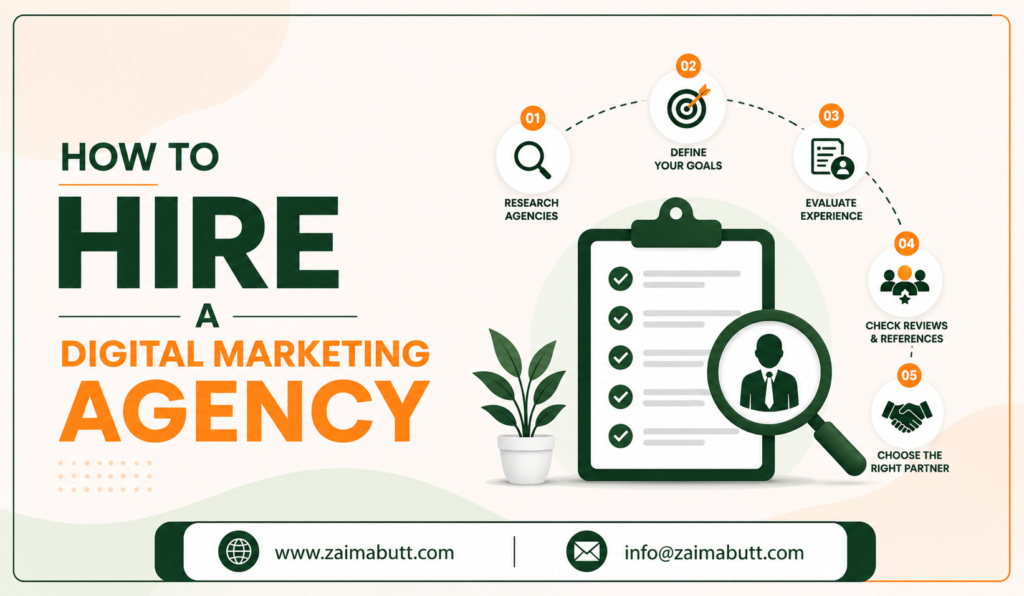
Choosing the right digital marketing agency has become more important than ever because online marketing is growing rapidly every year. According to recent digital marketing statistics, global digital ad spend crossed $740 billion in 2025, while SEO now drives nearly 53% of all website traffic. At the same time, social media ad spending has exceeded $230 billion globally, showing how strongly businesses now rely on digital platforms to attract customers and grow online. With so many agencies offering SEO, content marketing services, social media management, and paid advertising, finding the right partner can feel overwhelming. Some agencies focus only on quick sales, while others build long-term strategies that actually help businesses grow sustainably. The right digital marketing company should understand your business goals, create a strong SEO and content strategy, and help your brand build visibility, trust, and long-term success online. This guide explains how to choose a digital marketing agency in a simple, practical, and easy-to-understand way. Understand Your Business Goals First Before contacting any digital marketing agency, you should clearly understand what your business needs. Different businesses have different marketing goals. Some want website traffic, while others focus on leads, sales, social media growth, or stronger brand awareness. When your goals are clear, it becomes easier to choose the right online marketing agency that matches your business needs and long-term vision. For example: You should also think about your budget, target audience, competition, and long-term growth plans before hiring an agency. Businesses looking for faster lead generation may also benefit from performance marketing services that focus on measurable results and conversions. Look for Industry Experience Experience matters in digital marketing because every industry works differently. A business marketing strategy that works for a fashion brand may not deliver the same results for a law firm, healthcare company, or software business. When choosing a digital marketing agency, it is important to check whether they have experience working with businesses similar to yours. An experienced agency usually understands customer behavior, search trends, industry competition, and the best ways to improve conversions.Agencies with industry knowledge can also build a stronger SEO content strategy that matches your audience’s needs and search intent. Whether you need branding and marketing services for a startup or marketing services for small business growth, experienced agencies can create campaigns more effectively and avoid common mistakes. You can ask for case studies, previous client work, or examples of industries they have handled before making your decision. Check Their SEO and Content Strategy A strong digital marketing agency should have a deep understanding of modern SEO and content marketing. Today, SEO is not just about using keywords; it is about creating helpful, connected, and user-focused content that truly answers what people are searching for. Using semantic SEO principles, a good agency focuses on search intent, topic depth, content structure, internal linking, entity-based SEO, user experience, and overall content relevance. A professional SEO agency should also be able to explain how they build content clusters, optimize website pages, and improve topical authority over time. For example, if your business is related to digital marketing, they should create supporting content around SEO, branding, social media marketing, PPC advertising, content marketing, lead generation, and website optimization. This type of smart content strategy helps search engines better understand your website and builds long-term visibility instead of just short-term traffic. Understand Their Services and Team Structure Some digital marketing agencies focus on only one service, while others provide complete marketing solutions. Before hiring an agency, it is important to clearly understand what services they offer and whether they match your business needs. These services may include SEO, content writing, social media marketing, Google Ads, Meta Ads, email marketing, branding, website development, and analytics and reporting. It is also important to know who will actually handle your project. Ask whether you will be working with SEO specialists, content writers, graphic designers, ad managers, or account managers. A clear team structure helps improve communication, ensures better project management, and makes the overall marketing process more organized and effective. Ask About Communication and Reporting Communication is one of the most important factors in building a successful digital marketing agency partnership. A good agency should provide regular updates, simple reports, and clear explanations so you always understand what is happening with your marketing campaigns. You should know what work is being done, which results are improving, which campaigns are performing well, and what changes are needed. Avoid agencies that use confusing technical language without proper explanation. The best agencies make marketing performance easy to understand for business owners and keep everything transparent. You can also ask key questions to ensure smooth communication and accountability. Compare Pricing Without Choosing the Cheapest Option Price is an important factor when choosing a digital marketing partner, but the cheapest option is not always the best choice. Some low-cost agencies may use outdated SEO methods, copied content, or low-quality backlinks that can harm your website’s performance in the long run. That is why it is important to focus on value instead of just cost when selecting a digital marketing company or SEO agency. A quality online marketing agency or social media marketing agency should provide clear deliverables, realistic timelines, ethical SEO practices, long-term strategy, and transparent pricing. Good marketing services such as performance marketing services or content marketing services should be seen as an investment, not an expense. Sometimes paying slightly more leads to stronger, long-term business growth and better results. Watch for Red Flags Before Signing Some digital marketing agencies try to attract clients by making unrealistic promises. You should be careful if an agency guarantees instant #1 Google rankings, refuses to explain their strategy, uses copied content, avoids sharing reports, has no portfolio or reviews, or promises overnight growth. These are clear warning signs of poor or unsafe marketing practices. Digital marketing is a long-term process that requires testing, consistency, and continuous improvement. A trustworthy online marketing agency or social media marketing agency always focuses on sustainable results instead of
Full Service Strategic Marketing: A Simple Guide to Smarter Business Growth
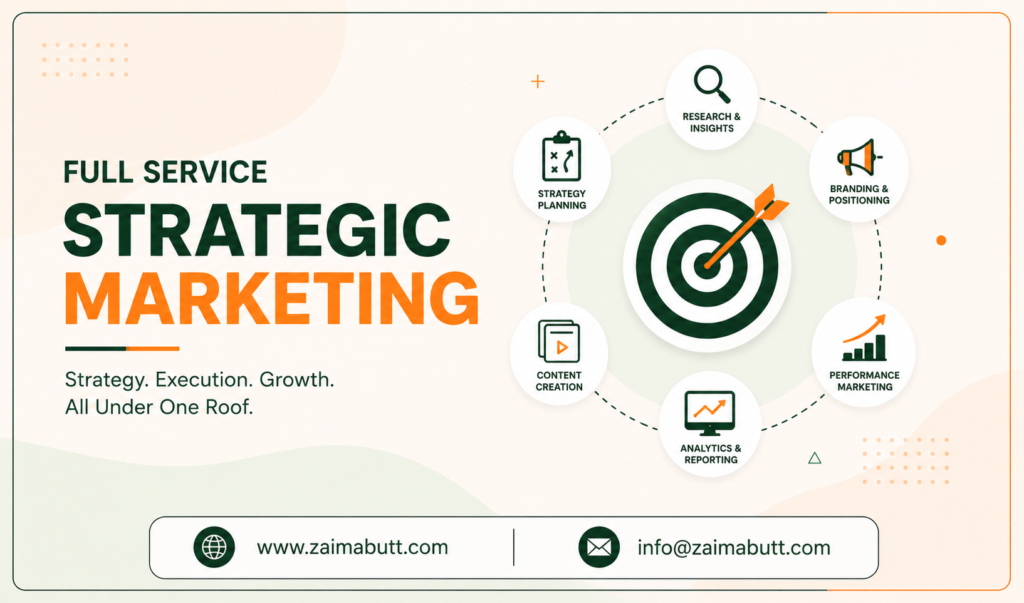
Marketing has changed a lot in recent years. Businesses are no longer growing just by running a few ads or posting on social media once in a while. Today, companies need a complete strategy that connects branding, SEO, content, advertising, customer engagement, and data analysis together. This is where full-service strategic marketing becomes important. Instead of using separate teams for every task, businesses now prefer a comprehensive marketing system that works toward one goal: smart, steady business growth. A strategic approach helps companies understand their audience, improve visibility, build trust, and increase sales in a more organized way. This shift is also strongly supported by real industry growth. Advertising and marketing revenues have continued to rise throughout the decade, with global expansion of nearly 30% between 2021 and 2025. In 2024 alone, marketing growth reached about 9.4%, while advertising grew at less than 8%. As a result, global marketing spending reached nearly 985 billion U.S. dollars, moving the industry close to the trillion-dollar mark. These numbers clearly show how important structured marketing has become for business success. Businesses that focus on long-term marketing strategies often perform better in search engines, attract loyal customers, and build stronger online authority. This is also an important part of semantic SEO, where websites create connected and meaningful content that answers user intent instead of only targeting single keywords. What Does Full Service Strategic Marketing Mean? Full-service strategic marketing is a complete marketing approach where all marketing activities work together under one clear strategy. Instead of handling SEO, social media, branding, email marketing, and paid ads separately, businesses connect everything into one system. This creates better communication, stronger branding, and more consistent results. A full-service strategy usually includes: The main goal is not only to get traffic but also to turn visitors into customers and customers into loyal supporters. Why Businesses Need a Strategic Marketing Approach Many businesses struggle because they focus only on short-term marketing. They run ads for a few weeks, post random content online, or follow trends without a proper plan. Strategic marketing helps businesses stay focused on long-term growth. A good strategy helps companies: Businesses that use strategic marketing often make smarter decisions because every campaign is connected to business goals. Semantic SEO also supports this approach by helping brands create topic-focused content clusters instead of isolated blog posts. Search engines now prefer websites that cover topics deeply and clearly. Main Services Included in Full Service Marketing A full-service marketing system includes different services that support each other. SEO Services SEO helps businesses improve their visibility in search engines. This includes: Modern SEO is no longer only about keywords. Search engines now understand context, meaning, and user intent. This is why semantic SEO is becoming more important for online growth. Content Marketing Content marketing helps businesses educate, engage, and attract customers. This can include: Good content answers real questions users are searching for online. It also helps businesses build topical authority in their industry. For example, instead of writing only one article about marketing, a business can create multiple connected articles around SEO, branding, advertising, customer engagement, and analytics. This creates stronger relevance for search engines. Social Media Marketing Social media helps businesses connect directly with audiences. Platforms like Instagram, LinkedIn, and Facebook allow brands to: Strategic social media marketing focuses on consistency and audience value instead of only promotional posts. Paid Advertising Paid advertising helps businesses reach targeted audiences quickly. This may include: A strong paid advertising strategy works best when combined with SEO and content marketing because both paid and organic traffic support each other. How SEO and Content Marketing Work Together SEO and content marketing are closely connected. Without content, SEO has little value. Without SEO, content may never reach the right audience. Modern search engines want websites that provide complete answers and useful information. This is why semantic SEO focuses on topic depth and user intent. For example, a business writing about digital marketing should also cover related topics such as: This creates topical relevance and improves search engine trust. Businesses that create connected content clusters often perform better than websites with random, unrelated articles. The Role of Branding in Business Growth Branding is more than a logo or color theme. It is the overall identity and message of a business. Strong branding helps businesses: A strategic marketing plan ensures that branding stays consistent across websites, social media, emails, and advertisements. Consistency helps customers remember a business more easily. Social Media and Paid Advertising Strategies Social media and advertising work best when guided by data and audience behavior. Businesses should focus on: Paid campaigns should support larger business goals instead of only generating quick clicks. A strategic campaign may focus on: Businesses that combine organic marketing with paid advertising often create stronger long-term results. How Data and Analytics Improve Marketing Decisions One major advantage of full-service strategic marketing is data tracking. Analytics help businesses understand: This helps companies make smarter marketing decisions instead of relying on guesswork. Tools like Google Analytics and Google Search Console help businesses monitor website performance and user behavior. Data-driven marketing also improves return on investment because businesses can focus on strategies that actually work. Benefits of Hiring a Full-Service Strategic Marketing Team Many businesses choose full-service marketing because managing everything internally can become difficult. A full-service team helps businesses: Instead of hiring separate specialists for every task, businesses can work with one connected team that understands the complete growth strategy. This also improves communication and campaign consistency. Common Mistakes Businesses Should Avoid Many businesses make marketing mistakes that slow down growth. Ignoring SEO Some businesses focus only on social media and forget about search visibility. SEO is important for long-term organic traffic. Publishing Random Content Random blog posts without topic relevance often fail to build authority. Inconsistent Branding Different messages across platforms confuse customers and weaken trust. Focusing Only on Sales Businesses should also focus on education, trust-building, and customer relationships. Not Tracking Performance Without analytics, businesses cannot understand what is
Why Digital Marketing is Important for Businesses
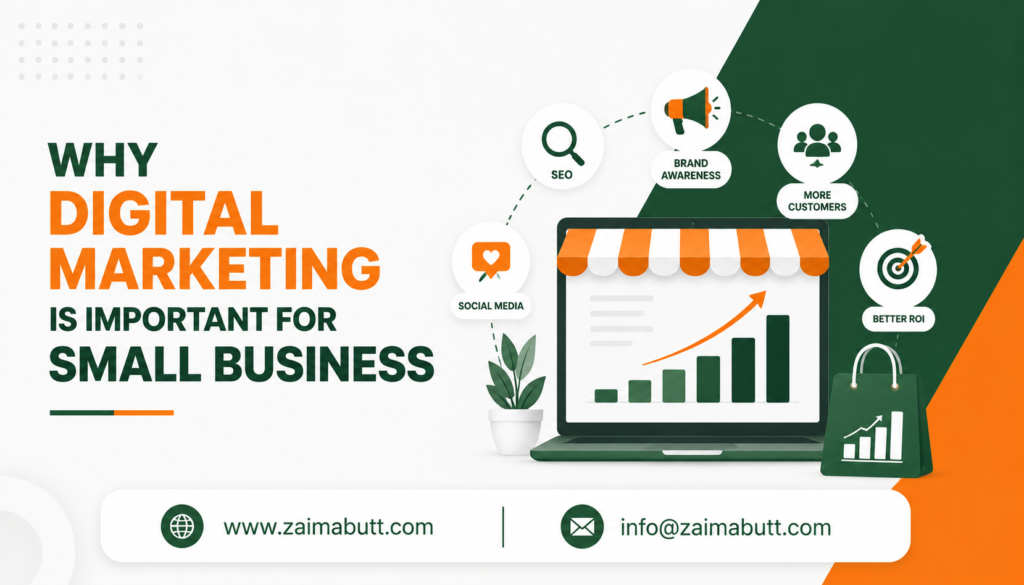
The way businesses reach customers has changed significantly over the last decade. Earlier, companies relied on newspapers, TV ads, billboards, and word of mouth. These methods still exist, but they are no longer enough on their own. Today, people search online before buying anything. Whether it is a product, service, or even a local shop, customers first check Google or social media. This shift has made digital marketing a basic need for every business, not just an option. Businesses that understand this change grow faster, while those that ignore it slowly fall behind. What Digital Marketing Really Means Today Digital marketing is no longer limited to posting on social media or running a few online ads. Today, it is a complete growth system that helps businesses connect with the right audience at the right time. From SEO and content marketing to email campaigns, paid advertising, and online branding, digital strategies help companies build visibility, trust, and customer engagement online. Since more than 5 billion people now use the internet worldwide, businesses that invest in online marketing for businesses have a much better chance of reaching potential customers where they already spend most of their time. One of the biggest digital marketing benefits is measurable growth. Unlike traditional marketing, businesses can track website traffic, customer behavior, ad performance, and conversions in real time. Studies show that companies using SEO and content marketing generate significantly more leads than businesses relying only on traditional advertising. Search engines process billions of searches every day, which is why strong SEO strategies help businesses appear in front of customers actively searching for products or services. This is one major reason why businesses need digital marketing to stay competitive in today’s online-first economy. Why Digital Marketing is Important for Business Growth Digital marketing is important because it connects businesses directly with their customers in a fast, measurable, and cost-effective way. Unlike traditional marketing, where results are hard to track, digital marketing shows clear data. Businesses can see: This makes it easier to improve strategies and grow faster. More importantly, it helps even small businesses compete with large companies by giving them equal online visibility. Key Benefits of Digital Marketing for Businesses Digital marketing allows businesses to compete more smartly and flexibly. Instead of spending large amounts on traditional advertising methods, companies can now reach targeted audiences online with better control over their budget and performance. This makes digital marketing a practical solution for both startups and established businesses looking to grow steadily. Another major advantage is flexibility. Businesses can test different strategies, analyze customer responses, and improve campaigns in real time. This data-driven approach helps brands make better marketing decisions while increasing visibility, engagement, and conversions online. 1. Cost-Effective Marketing One of the biggest advantages is cost. Traditional marketing, like TV or print ads, can be expensive. Digital marketing allows businesses to start small and scale gradually based on results. Even a small budget can bring good reach if used correctly. 2. Wider Audience Reach With digital marketing, businesses are not limited to one city or country. They can reach global audiences through websites, social media, and search engines. This opens new growth opportunities that were not possible before. 3. Better Targeting Digital marketing allows businesses to target specific audiences based on: This means marketing efforts are not wasted on the wrong people. 4. Measurable Results Everything in digital marketing can be tracked. Businesses can analyze performance and make changes quickly. This helps reduce waste and improve return on investment (ROI). How Digital Marketing Builds Brand Awareness Brand awareness means how well people recognize and remember your business. Through effective SEO and content marketing, businesses can improve their visibility on search engines and reach customers who are actively searching for products or services online. When a brand consistently appears on platforms like Google, Instagram, Facebook, or YouTube, people become more familiar with it and begin to trust it over time. This is why social media marketing for business growth has become an essential part of modern marketing strategies. Repeated online exposure not only strengthens customer trust but also supports lead generation online by attracting potential customers through valuable content, engaging campaigns, and consistent branding. A strong digital presence ultimately helps businesses appear more professional, reliable, and competitive in today’s online marketplace. Role of SEO and Content Marketing in Business Success SEO (Search Engine Optimization) is one of the most powerful parts of digital marketing. It helps businesses appear on Google when people search for related products or services. For example, if someone searches “best digital agency near me,” SEO helps a business show up in those results. Content marketing supports SEO by providing useful information like: Good content answers customer questions and builds trust before they even buy something. This is why SEO and content marketing work best together. Social Media Marketing and Customer Connection Social media platforms like Facebook, Instagram, LinkedIn, and YouTube are no longer used only for entertainment. They have become powerful tools for online marketing for businesses, helping brands connect directly with their target audience in real time. Companies use social media to share updates, promote offers, build communities, and showcase their brand personality more humanely and engagingly. This direct interaction helps businesses stay visible and relevant in a highly competitive digital space. One of the biggest digital marketing benefits is two-way communication. Unlike traditional advertising, social media allows customers to comment, ask questions, share feedback, and interact with businesses instantly. This creates stronger customer relationships and builds long-term trust and loyalty. The growing importance of digital marketing can clearly be seen in how businesses use social platforms not only to increase brand awareness but also to improve customer engagement, strengthen their reputation, and drive business growth online. How Digital Marketing Helps Generate Quality Leads A lead is a potential customer who shows interest in a product or service. Digital marketing helps attract these leads through targeted campaigns. For example: This means businesses don’t just get traffic, they get the right traffic
Marketing as a Service (MaaS): A Simple Guide to Smarter Business Growth
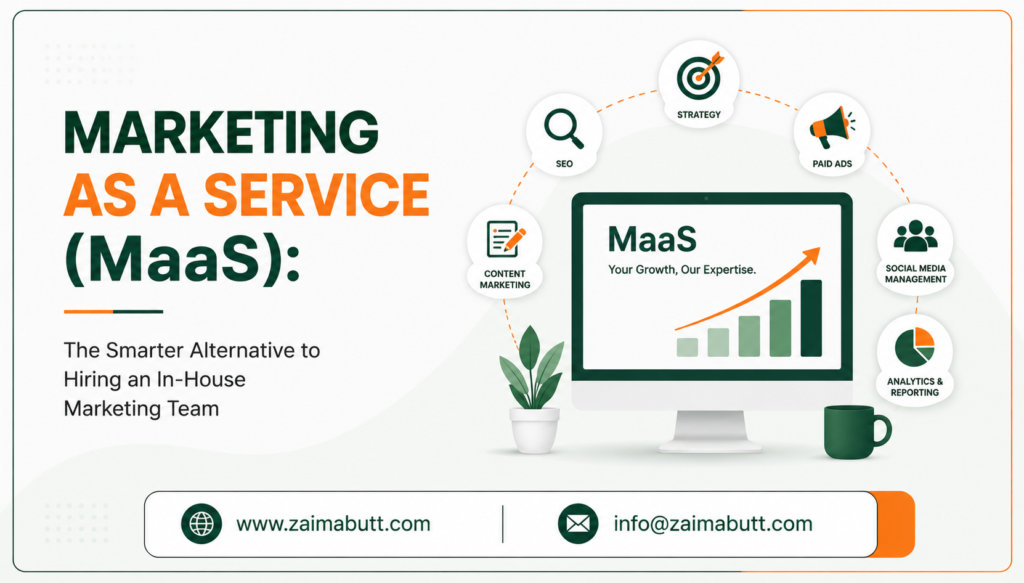
The way businesses market themselves has completely changed over the last few years. Customers now search online before buying products, compare brands on search engines, and trust businesses that provide useful and helpful content. Because of this shift, companies can no longer rely only on traditional advertising methods. At the same time, building a full in-house marketing team has become expensive for many businesses. Hiring SEO experts, content writers, designers, strategists, and social media managers requires both time and money. This is one of the biggest reasons why Marketing as a Service, also known as MaaS, is becoming popular. Marketing as a Service allows businesses to outsource their marketing activities to professionals who already understand SEO, branding, content strategy, and lead generation. Instead of managing everything internally, businesses can work with one experienced team that handles their digital growth in a smarter and more organized way. In 2026, MaaS is becoming one of the most effective ways for businesses to grow online while saving both resources and effort. What Is Marketing as a Service? Marketing as a Service is a flexible marketing model where businesses pay for professional marketing support according to their needs. Instead of hiring multiple employees for different marketing roles, companies work with a marketing service provider that offers complete digital marketing solutions under one system. This model has seen a major surge in adoption, with the global marketing services ecosystem valued at $444.9 billion, as organizations look to modern digital and performance-driven customer acquisition. Over 50% of companies now actively outsource front-office functions like sales and marketing to third-party providers to keep pace with rapid digital transformation. Furthermore, the core motivation for this approach has evolved. While cost efficiency remains vital, executive priorities have fundamentally shifted: only 34% of executives now cite cost reduction as their primary reason for outsourcing, down from 70% in 2020. Instead, the top drivers now have immediate access to specialized talent and advanced marketing technology. The biggest advantage of MaaS is flexibility. Businesses can increase or reduce services depending on their goals, budget, and stage of growth. This makes it especially helpful for startups and growing companies that need smart marketing support without large investments. Why Businesses Are Moving Toward MaaS Modern businesses operate in a highly competitive digital environment where visibility matters more than ever. Search engines now prioritize helpful content, user intent, website authority, and topical relevance. Companies that fail to adapt often struggle to reach their target audience. Many businesses are choosing Marketing as a Service because it offers professional expertise without the challenges of traditional hiring. Instead of spending months building a team, companies can immediately access skilled marketers who already understand digital trends and proven growth strategies. Another important reason behind the rise of MaaS is cost efficiency. Small businesses usually cannot afford separate departments for SEO, branding, design, and advertising. MaaS combines all these services into one organized solution, making marketing more affordable and practical. Businesses also benefit from faster execution. Experienced marketing teams already know how to create campaigns, optimize websites, and improve online visibility, which saves valuable time for business owners. How Marketing as a Service Actually Works Marketing as a Service usually begins with understanding the business itself. The marketing team studies the company’s goals, target audience, competitors, industry trends, and current online presence. This research helps create a strategy that matches the business’s actual needs instead of using generic marketing methods. Once the analysis is complete, the team develops a structured marketing plan. This may include SEO optimization, content marketing, branding improvements, lead generation campaigns, website optimization, and social media management. Each activity is connected to the overall growth strategy. Unlike random marketing efforts, MaaS focuses on long-term results. Businesses receive ongoing support, regular updates, and performance reports that show how campaigns are performing. These reports often include website traffic growth, keyword rankings, engagement levels, and lead generation results. This organized and data-driven process helps businesses make better decisions while improving their online visibility over time. Important Services Included in MaaS One of the strongest advantages of Marketing as a Service is that it combines multiple services. Instead of treating marketing as separate tasks, MaaS connects everything into one complete system. SEO Services SEO plays a major role in modern digital marketing. However, SEO today is not just about adding keywords to articles. Search engines now focus more on understanding topics, user intent, and content quality. A strong MaaS provider uses semantic SEO principles to create content that answers user questions naturally while building topical authority. This includes proper internal linking, content clustering, technical SEO improvements, and entity optimization. When done correctly, SEO helps businesses rank for many related searches instead of only one keyword. Content Marketing Content marketing helps businesses educate and attract potential customers. Blogs, landing pages, guides, newsletters, and website copy all work together to build trust with audiences. Good content also improves SEO performance because search engines prefer websites that provide useful information. Businesses that consistently publish valuable content often receive more organic traffic and stronger customer engagement. Branding Branding is another important part of MaaS because customers remember businesses that have clear messaging and identity. A strong brand voice helps companies stand out in competitive industries. Branding services may include logo development, messaging strategy, tone of voice, audience targeting, and visual consistency across platforms. These elements help businesses create recognition and trust. Lead Generation Marketing is not only about visibility. It is also about attracting people who may become customers. Lead generation strategies help businesses convert website visitors into real business opportunities. This can include SEO traffic, landing pages, email campaigns, paid ads, and conversion optimization techniques. A strong lead generation system supports long-term business growth. Benefits of MaaS for Startups and Small Businesses Startups and small businesses often face budget limitations, which makes Marketing as a Service extremely valuable. Instead of hiring multiple employees, businesses gain access to an experienced team that already understands digital marketing. One major benefit is reduced operational cost. Companies