
What is AI SEO? A Beginner-Friendly Guide (2026 Edition)
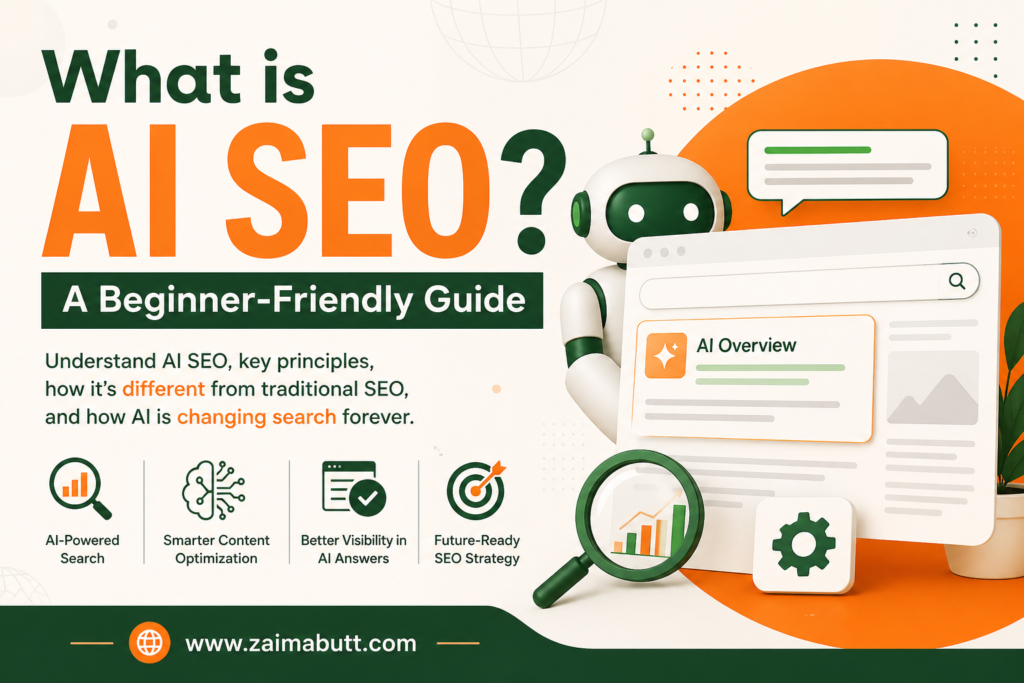
ai seo guide

What is AI SEO? Search is evolving faster than ever. With the rise of AI-powered search experiences like Google’s AI Overviews and generative answers, traditional SEO alone is no longer enough. This shift has introduced a new discipline—AI SEO. But what exactly does that mean, and how should you adapt? Let’s break it down in a clear, practical way.   AI SEO AI SEO refers to the practice of optimizing your content not just for traditional search engine rankings, but also for AI-generated responses and search experiences. In simple terms:It’s about making your content understandable, trustworthy, and extractable by AI systems that generate answers directly on search result pages. You might also hear people asking, what is ai seo called or what is seo for ai called. The terms are often used interchangeably with: While the terminology varies, the core idea remains the same:👉 Optimize content so AI systems can find it, trust it, and use it in answers. Why AI SEO Matters in 2026 Search engines are no longer just listing links—they are answering questions directly. This means: If your content isn’t optimized for AI-driven search, you risk becoming invisible—even if you rank traditionally. What Elements Are Foundational for SEO with AI? A common question is: what elements are foundational for seo with ai? Here are the core pillars: 1. Topical Authority AI favors sources that demonstrate deep expertise across a topic—not just one article. 2. Structured Content Clear headings, logical flow, and semantic organization help AI extract answers easily. 3. Entity Optimization AI understands concepts (entities), not just keywords. Your content should clearly define: 4. Trust Signals (E-E-A-T) Experience, Expertise, Authoritativeness, and Trustworthiness are more critical than ever. 5. Contextual Relevance Instead of keyword stuffing, focus on covering related subtopics naturally. Is Optimizing Content for AI Search Different from SEO? Another important question: is optimizing content for ai search different from seo? The short answer: Yes—and no. What’s the Same: What’s Different: 👉 Think of it this way:Traditional SEO helps you rankAI SEO helps you get selected How AI SEO Works (Simplified) AI systems analyze content differently than traditional algorithms. They: This is why content that is: …has a much higher chance of appearing in AI-generated responses. Traditional SEO vs AI SEO Traditional SEO and AI SEO are closely related—but their execution differs in key ways. Traditional SEO focuses on: AI SEO focuses on: 👉 Want a deeper breakdown?Read the full guide here: [Traditional SEO vs AI SEO] Core Principles of AI Search Optimization To succeed in AI SEO, you need to align with how AI systems interpret content. Key principles include: 👉 Explore the full framework here:[Core Principles of AI Search Optimization] How AI Changes Search Behavior AI is not just changing algorithms—it’s changing how people search. Users are now: This shift means your content must: 👉 Learn more about this shift here:[How AI Changes Search Behavior] Common Misconceptions About AI SEO “AI will replace SEO” No—SEO is evolving, not disappearing. “AI content doesn’t rank” Low-quality content doesn’t rank—regardless of how it’s created. “Keywords don’t matter anymore” They still matter, but context matters more. The Future of AI SEO AI SEO is not a trend—it’s the direction search is moving toward. In the near future: Final Thoughts AI SEO is about adapting to a new reality where search engines act more like answer engines than directories. If you focus on: …you won’t just keep up—you’ll gain a serious advantage. What to Do Next If you’re just getting started: And most importantly—start early. Because in AI-driven search,👉 visibility goes to those who adapt first.  
What Is B2B Marketing Automation? (Complete Guide for 2026)

If you’re still manually following up with leads, sending one-off emails, or juggling spreadsheets to manage prospects – you’re already behind. B2B marketing automation isn’t just a productivity tool anymore. It’s the backbone of scalable, predictable growth for modern businesses. In this guide, you’ll learn exactly what B2B marketing automation is, how it works, why it matters, and how to use it to generate high-quality leads and booked appointments on autopilot. What Is B2B Marketing Automation? B2B marketing automation refers to the use of software and technology to automate repetitive marketing tasks, nurture leads, and streamline the entire customer journey—from first touchpoint to conversion. Instead of manually sending emails, tracking leads, or following up, automation tools handle these processes based on predefined triggers and workflows. Popular platforms like HubSpot, GoHighLevel, and Marketo allow businesses to: Why B2B Marketing Automation Matters Let’s be blunt: manual marketing doesn’t scale. If you’re targeting high-ticket clients (like real estate, healthcare, SaaS, or agencies), your success depends on consistency, speed, and personalization – all at scale. Here’s what automation solves: 1. Inconsistent Lead Follow-Up Most businesses lose leads simply because they don’t follow up fast enough. Automation ensures: 2. Low Conversion Rates Generic outreach kills conversions. Automation enables: 3. Time Drain on Repetitive Tasks Manually sending emails and tracking leads is a waste of high-value time. Automation frees you to focus on: How B2B Marketing Automation Works At its core, B2B marketing automation is built around workflows. Here’s a simple breakdown: Step 1: Lead Capture Leads enter your system via: Step 2: Segmentation Leads are categorized based on: Step 3: Automated Workflows Pre-built sequences trigger actions like: Step 4: Lead Nurturing Leads receive value-driven content over time: Step 5: Conversion & Tracking You track: And optimize based on data. Key Features of B2B Marketing Automation To build a high-performing system, these features are non-negotiable: Email Automation Automated sequences for cold outreach and nurturing. CRM Integration Centralized lead tracking and pipeline management. Multi-Channel Communication Email, SMS, WhatsApp, and even AI voice follow-ups. Lead Scoring Prioritize leads based on intent and engagement. Analytics & Reporting Data-driven decisions based on real performance. Real-World Example of B2B Marketing Automation Let’s say you’re targeting roofing companies in the US. Instead of manually reaching out: Result:A fully automated pipeline generating qualified appointments daily. Benefits of B2B Marketing Automation Scalability Reach thousands of prospects without increasing workload. Better Targeting Send the right message to the right person at the right time. Time Efficiency Eliminate repetitive tasks. Higher ROI More conversions with less manual effort. Consistent Lead Nurturing Build trust over time without manual input. Common Mistakes to Avoid Most people fail with automation because they treat it like a shortcut. Avoid these: Automation amplifies your strategy — it doesn’t fix a bad one. Best Practices for B2B Marketing Automation If you actually want results, follow this: 1. Start With a Clear Funnel Know your: 2. Focus on Personalization Use: 3. Build Multi-Touch Campaigns Don’t rely on one channel. Combine: 4. Test & Optimize Continuously Track performance and refine: Is B2B Marketing Automation Worth It? Short answer: yes – if you’re serious about growth. If you’re: Then marketing automation is no longer optional. It’s your competitive advantage. Final Thoughts B2B marketing automation is not about replacing human effort – it’s about multiplying it. The businesses winning in 2026 are not the ones working harder…They’re the ones building smarter systems. If you want predictable leads, consistent appointments, and scalable growth – you need automation working for you 24/7. Meta Title Meta Description SEO Keywords Included Primary keyword: LSI keywords:

digital marketing strategist
Copyright © 2024 AXCESS. All Rights Reserved

Information

Contact us

Contacts

Copyright © 2024 AXCESS. All Rights Reserved

Links

Categories

Contact info

Copyright © 2026. All Rights Reserved. Designed and Develped by Mediacube

Table of Content